Proposed recommissioning of the Cessnock to Maitland railway corridor

The community asks the Minister for Regional Transport NSW (Jenny Aitchison) that funding be made available for the rehabilitation of the old South Maitland Railway (SMR) coal rail line from Maitland to Cessnock, extending to MIllfeild, by re-introducing a passenger Service and creating new platforms and stops to reflect, current and future development along the line. 

Funding for:

1)  The purchase of the line for the transport services

(2) For the establishment of stops along the line that dovetail with present and proposed developments along the line, and to maximise the public good for the areas, between Maitland and Cessnock extending to Pelton and the local towns in the environs of Cessnock.

(3) The Renewal of sleepers and rails that may have deteriorated over the period the line has not been used for passenger Services.

(4) Two passing loops and appropriate signalling, to ensure that  more than one service can operate on the line at a time, and ensure a regular and timely service for a passenger service,  plus one passing loop at the end of the line at Pelton to properly manage the trains and provide appropriate stabling and turnaround facilities, this may incorporate lines both sides of a station that enables a  flexible changing of trains needed for the next services to Maitland.

(5) Appropriate signalling, supporting   road crossings.

(6) suitable Car parking facilities at all Stops, 

(7) Suitable Bus stops and Turning areas to support the Stops and support bus infrastructure.

End Motion

justification for a new service before 2030

The old  (SMR) coal rail corridor operated by the South Maitland Railway (SMR)  until 1975, and operated as a passenger service until its demise, the demise is said to because of the increased use of motor vehicles for commuting, during the period after its closure it,  until recently, operated as a tourist railway on occasions, which stopped because of an ownership change and lack of maintenance. 

 Until 1972 it supported the local community in the area then in 1975, the siding to the Cessnock station was removed and the last train from Cessnock to Maitland was in August 1975.

When the station buildings were removed, to become an industrial development site, the site of old station was then built on and therefore the old site is not a viable location for the rehabilitated line.

The New station at Cessnock

The reinstatement of the old siding line from the Paxton line to the old location of Cessnock station was no longer possible or desirable. Any new service must include passengers from Maitland and Pelton via the old Paxton colliery line to Cessnock.  Because passengers from Pelton and Bellbird may need to stop at Cessnock, whereas a siding from the line will not accommodate this, and is impractical for Cessnock bound passengers and therefore cannot be reinstalled, to accommodate passengers beyond a new Cessnock station on the line, e.g. Bellbird or Pelton passengers, who wish to travel to Cessnock for work or leisure a new station on the line will be required.

Therefore, there must be a proposal to build a new station at Cessnock, although not as close to the CBD as the old one would have been , the construction of a new station building would include carparks and a bus stops around the intersection of the old railway with Vincent Street, and would be a viable alternative to the old station, and may require a shuttle service to the CBD of Cessnock.

What has changed?

The old coal rail corridor operated by the South Maitland Railways (SMR) until 1967 and operated as a passenger service until 1975, its demise was said to be the increase used of motor vehicles for commuting by commuters.

What has changed over the years, is that the population of the regions of Maitland and Cessnock have increased and are set to increase exponentially, over the next few years up to 2041which is  the  date of the next planning strategic plan), already in 2026 traffic on the roads are causing severe traffic congestion at peak times both mornings an evening, with  the prospects of more cars on the roads, caused by increased housing and population, roads will have to be widened and made more streamlined, this scenario is why most regions incorporate light rail system or if they have a heavy rail, in place increase the amenity of it, which generally cost substantial sums of money.

The railway line even in its unmaintained status  is a fortunate legacy of the day when coal was being transported from local collieries as far as Paxton near Cessnock by the South Maitland railways(SMR) and  the Richmond vale Railways to the Coal ships at the port of Hexham for export, Hexham,  which was the early port for the shipment of high grade Newcastle coal  to Sydney,  and beyond, even to Whyalla South Australia to help make steel for export to the world.

Populations increasing in the region

The population of both Maitland LGA and Cessnock LGA are Growing at phenomenal rates in 2026.

There are new residential urban developments planned, in Bellbird, Cliftleigh and Gillieston Heights and Paxton (ref 2041 Strategic plan.).

Both LGAs and regional Areas are right at the top of the growth rates in the State of NSW. 

In Maitland alone it is estimated between 2021 and 2041 the population will increase by 44,000, and provide 11,500 jobs, Cessnock LGA is to reach 112,000 by 2041, according to Cessnock council, which is nearly twice the 2021 census data figure.

This will simply mean that housing in the region will mushroom and traffic on the roads will be hard to manage with the current road network, which means that a good underlying public transport system based around a regular rail service will be essential as demonstrated in many other parts of the State to manage population movements, for every-day commuting.

This means that there is a roll for rail into the future in Maitland and Cessnock:  This rail corridor in operation, provides that opportunity for an efficient regular service, to offset Road expenditure in the region.

Proposed Rail Stops from Maitland on the redeveloped Railway to Cessnock:

(Stop No. 1)  On leaving Maitland Station The first rail stop on the line is the old East Greta Junction station , The Line firstly turns south off the main Hunter line, and then goes to the first stop,  at the old East Greta Junction station, which services Telarah, The hunter  Trade School, and the South Maitland Railway Museum.

Stop No. 2) This stop will be called the  “Ryans Road” Stop, (looking forward to Ryans Road Connecting to Simpsons lane, a new stop on the Railway,  this stop services , Gillieston Heights and the Gillieston Public school about 1200 metre south on Ryans Road corners with Gillieston Rd and Northview Street, this is  a school that  is under redevelopment in 2026 and is due to be completed in 2027, the project will be adding 32 new class rooms to the school, a meeting hall, a new canteen, and the replacement of 24 demountable buildings, with new class rooms., the total funding for the project is 65.1 Million dollars. This stop will accommodate approximately 500 new homes, with more planned soon, and should include a car park and bus turning bay.

(Stop No. 3) Will be at the intersection of The Railway with Kiah Road, this stop provides easy access from Gillieston Heights via Saddlers Drive and Cartwright Street. 

This stop will be called Kiah Road and will probably be sited near the old platform, of the Former East Greta Railway Station on the south side of Kiah Road, the site should incorporate a car park and a Bus stop, With a turning area. 

(Stop No. 4) is near the old former Aberdare stop, which is west of the new Loxford Estate, which will service the Loxford Estate, as well as the new Wallis Estate opposite the Loxford Estate on main Road, this stop will also service the new community centre proposed in the Loxford Estate, and the new proposed shopping precinct,  which will be part of the new Loxford Estate. This Stop will be called after the locality on the old map” Wangara” and have a car park and bus turnaround zone in its final form.

(Stop No.5) This stop will be at the intersection of the planned extension of William Testers Drive and the Railway Line, serving Cliftleigh and the new Avery’s Lane Estates.  A bus services will be provided from this suburb and from Kurri to this stop., the stop will have a an appropriately sized car park and bus stop, the name of the stop will be “Cliftleigh” and have a car park and bus turnaround zone in its final form.

Stop No. 6) This stop will be at the intersection of the railway and Bowditch Avenue in the locality of Loxford, it will service Kurri Kurri TAFE and Heddon Greta Speedway, the Kurri power station, and ancillary industries in the area. The stop will be called “Loxford”.

Stop No.7) This Stop will incorporate the Old Station platform at Kurri Kurri. in Railway Parade. This Stop will service Kurri Kurri, Pelaw main and the western End of Weston, it should be provided with a large car park and bus stop and shelter. So that shoppers can access the town of Kurri, Maitland and Green Hills shopping Centres by public bus transport.

Revitalizing the town of Weston

(Stop No. 8) This Stop services the town of Weston and is situated at the intersection of Scott streets and Stations Street Weston, it is in the vicinity of the old station platform, and should provide a car park and bus stop, it is situated in the old town centre which has been largely by-passed by road access, it is an important historic town, in the region a should be rebuilt, and still has  three old pubs buildings operating into recent times, providing meals and accommodation. There is a medical centre in station street across first street , there was a Butcher who went out of business in Station St some years ago because of the inability of competing with supermarket pricing, with the advent of a new rail service there will be more activity in the town again  again to services and shop commerce in the town may be revived, a thrifty shop stands empty in Station street, and the Weston Workers Club is walking distance from the station stop as well as with  the football oval. 

The old Thrifty store has been replaced by a food mart close by, which provides grocery items when the town was a functioning as a town, with the advent of a railway service in this forgotten town, the town may be revived a little, and more properties may be opened to commerce in the future . And of course, the name of the stop will be “Weston”. We are about half way along this Railway and most of the stops along the line have been stops under the previous rail passenger service, with one notable exception, the stop at Cessnock, will no longer be a siding to the station but  will be a stop that enables commuters to alight from both directions, from Maitland and  from Bellbird or Pelton.

The decline of Weston

Weston is small town on the Weston edge of Kurri Kurri, some years ago it, had a passenger rail service, this service ended about !975, after the line was closed, around 1983, a road diversion was made in the town that truncated the main Road from Cessnock Road,

With loss of the rail service and main road from Cessnock, both happening to the town, within an eight-year period, it became a back water to the region, and the small town did not develop as it should have.

Many of community see the bridge over the railway as the cause of the isolation of the town as an impediment to flow of traffic from Weston to Kurri and to Cessnock. Two solutions may solve the problem created by the bridge over the railway, which has created a no right turn at the end of Cessnock Road replaced by a right into first street to travel over the bridge over the railway.  This has created the isolation of part of the old town, which discouraged threw traffic and development of the town.

Option (1) to ensure the ability to connect to the Northcote Road, by completing a right hand turn over the bridge, traffic lights would need to be installed to enable the right-hand turn, with an appropriate turning lane.

Option (2) A new bridge would have to be constructed from the end of Cessnock Road across to Northcott Road, giving options to turn into Appleton Av, and hospital Roads. This would be by far the costliest option to save the township of Weston and ensure a vibrant hub around a new Weston railway station rail stop.

Stop No. 9) This is the Abermain Stop, which is about 400metre west of Orange Street on Cessnock Road, which is one of main intersection used by most drivers to get to Cessnock from the Hunter Express Way. The stop will service the small town of Abermain, and the stop will continue to be called “Abermain”.

Stop No. 10) This is the Neath Stop, which will use the old stop platform about 100 metres west of Carrs Road Neath, 

This stop will service Neath Hotel and provided appropriate car Parks and bus stops on Cessnock Road, which are existing stops, and service the township of Neath and shall be called “Neath”.

Stop No. 11) This stop is the old stop at Caledonia Street Railway platform near the Corner of Cessnock Street. extension and Collier Street, it will service the suburban areas of Cessnock around Aberdare and Kearsley, Elrington, Abernethy and Kitchener, appropriate bus services will stop at this railway stop to provide a complete service, an appropriately sized car park should be provided at this stop and the stop will be called “Caledonia”.

New location for the Cessnock Station

Stop No. 12) This will be the stop for the township of Cessnock, as explained earlier, and, it will be a new station complex in the line of the of redeveloped corridor from Paxton colliery railway .The stop could be placed at intersection of the old coal line where it crosses Vincent street, the station buildings could be situated on the Northern side the line , and incorporate car parks and bus interchange, that would provide a shuttle to nearly sporting venues and the Cessnock CBD, it would service sports fields an Kitchener and Quorrobolong

The stop will be provided with a new bus stop and appropriate bus services., the stop will have a large car park and in time be provided with a shuttle to the Centre of the town of Cessnock, to meet the train. This will service the CBD of Cessnock and inner-city housing.

Therefore, by reinstating the old siding from the Paxton colliery line to the old Cessnock station, is impractical, because if passengers beyond a new Cessnock station wish to travel there for work or leisure from the west they cannot stop at the old location of the station.

Therefore, a proposal to build a new station, although not as close to the centre of the city as the old one would’ve been, by constructing of a new station building, at Vincent street at the crossing of the railway south of the town, on the south side of the railway. 

Stop No. 13) Bellbird stop, this stop is south of Wollombi Road opposite the intersection with Bell Street Bellbird., This stop will service all of Bellbird and bellbird heights. It will have an appropriately sized carpark and be serviced by bus service along Wollombi Road and will incorporate a multi bay bus stop.

Stop No. 14) The last stop on the line will be 200metres east of the rail Bridge over Wollombi Road, it will occupy the land between the Wollombi Road and the railway reserve and will incorporate a platform  and station building, a car parks, and a bus stop on the Wollombi road on both sides of the road with a pedestrian crossing with lights. The Stop will service Paxton via Middle Road and Ellalong via Ellalong Road, plus Millfield and Wollombi Road, and Wollombi via Wollombi Road.

The old coal rail corridor, from Maitland to Cessnock, is a fortunate legacy of the day when coal was being transported from South Maitland to the ship at the port of Hexham.

This Rail corridor operated as a freight and passenger line from 1904 to 1975 with the hub station in Vincent Street Cessnock, after which the station was demolished and replace by industrial buildings.

The decline of Weston

Weston is  a small town on the Weston edge of Kurri Kurri, for some years, it had a passenger rail service, this service ended about !975, after which the line was closed,  in around 1983 a road diversion was made in the town that truncated the main Road from Cessnock,

with loss of the rail service and main road from Cessnock, the old town became a back water to the region, and the small town did not develop as it should have,

Many of community see the rail bridge over the railway, as the cause of the isolation of the town as a main impediment to flow of traffic from Weston to Kurri and to Cessnock a through Weston. Two solution may solve the problem created by the bridge constructed about 1983 that was then i feed by a left turn off the Cessnock Road  at Station street, and then an immediate right turn into First street to travel over the bridge and to Kurri, the old road ended at First street with the only option at the end of the Cessnock road, being  a left turn into first street or straight on into Government road, which gives no option to cross the railway or to continue on to Kurri. 

There are two potential solutions:

Option (1) allows access to Northcote Road by enabling a right turn over the bridge. This requires traffic lights and a dedicated turning lane for effective traffic management.

Option(2) A new bridge would have to be constructed from the end of Cessnock Road to Appleton Av over the railway with the provision to turn into Hospital Road on the other side of   George Smith Reserve and then provide a priority turn into Northcote Road from Appleton Road. This would be by far the costliest option and the most logical option to save the township of Weston and ensure a vibrant hub around a new Weston station rail stop.

Rolling stock for the services

The State of New South Wales (NSW) is in a fortunate position in 2026, because it is replacing many of its regional trains, including the XPT fleet with new Spanish made CAF trains.

As part of the purchase the NSW Government Is replacing, its Explorer fleet and its Adventurer Fleet, which will leave several older model Com Eng. Trains not in use. These surplus train and locos will be ideal to be used on a rejuvenated Maitland to Cessnock line in 2028.

Passing Loops

It is envisaged to incorporate up to Three passing loops on the line two on the line between Maitland and Cessnock, and one at the terminus at Pelton. 

The passing loop at Pelton would simply be a rail line down both sides of a platform, which meet into one line which enables a train the access both platforms, enabling two trains to leave consecutively after each other. The dual tracks after the stop, will be long enough to stable two trains.

Other loops along the line will be using signalling to enable passing trains to either Cessnock or to Maitland.

It would be envisaged that up to 4 trains sets be dedicated to the line and trains be stabled at Maitland and Pelton.

This rail line extending to Pelton will be instrumental to service series of new urban areas, including, Gillieston heights, Cliftleigh, Weston, Cessnock, bellbird and Paxton.

By David Holland

B.A.S Environmental Planning (1995)

M. Environmental Mgmt. (natural Resources) (2017)

date of post: 1/5/2026
Has  Australia’s Central Coast of New south wWales, had visitors from Egypt 5000 years ago, and did it effect Egyptian history?


Acknowledging the early Egyptian visits to Australia and our first people’s memory on the Central Coast of a tragedy that befell our visitors from Egypt to our land, and how it had an impact on the ancient Egyptians and Egyptian royal succession5000 years ago. 

This letter is in response to the paper by Dr. R.M. de Jonge Oct. 2014, on the subject of the Gosford glyphs, to encourage more research into the true history of the Central Coast

The paper is:- entitled Burial Site of LORD Nefer-ti-ru, son of King Khufu.: c. 2637BC-2614 BC fourth dynasty of Egypt (Gosford NSW, Australia)

Dear Dr. Jonge,

I would like to thank you for research on the Gosford Glyphs, which fills in some of the details of this particular visit, we believe the ancient Egyptians visited Australia’s Central Coast, which had a tragic ending and filled in some of stories inscribed on the rock walls that you  had presented as fact according to the reading of the Egyptian hieroglyphs found inscribed on several rock faces on the southern parts of the Central Coast of New South Wales near Gosford NSW.

I would like to build a case, for a set of circumstances that could have happened  for the validation of the account presented by you and the stories of the site being, one of the first contacts sites near the, proposed burial site for the visitor from the middle east in antiquity, and their unfortunate circumstances in New South Wales.

By using the local knowledge of the locations around the Brisbane Waters to understand how the stories translated from the sandstone wall could be a true account of the events 5000 years ago in Brisbane Waters.

I am a member of the Habitat Association, we are a small group of interested academics and researchers, who have an interest the mechanisms of settlement, and in particular on the Australian Central coast of New South Wales, we would like to find some solid scientific proof that the site was infact constructed by a group of ancient Egyptians and clarify the enigma of the site.

There is some contradictions as to the age of the site, the inscriptions suggest that the site is 5000 years old but , other histories related to the technology at hand 500 years ago might suggest that site is only 500 years old, some archaeological investigations, would help to answer this question, and many other questions about the site. 

The habitat Association, is a group of members, who are interested, in original thought, who, research as members of the group who are professional people, with backgrounds in town planning and ecology, who have an interest in human habitats, settlement and their, their interactions in the environment and their movements over time, have been focused over last 12 years of the organisation’s life has been on the environs of the New South Waled, Central coast and Newcastle areas north of the Australian Capital city of Sydney.

We think we might be able to use our knowledge of human movement patterns by using local knowledge as several of our members have lived in several locations around the possible passage of the visitors into the Brisbane Waters. One of our members has kayaked around Broken Bay to the site near “The Spike Milligan’s Bridge”, an realises the ease the Egyptians explorers would have found to get to this sheltered anchorage at park Bay, near Woy Woy, bearing in mind 5000 year ago the railway causeway and bridge, that was not constructed until 1930, and would not have been there nor would the row of houses along the beach, one of which conceals the trail from the beach to the glyph site, which, was the clue to story of the landing place, the trail may have been destroyed over the years by the housing development but remains on the google maps.

We feel that there is enough topographical evidence to the site, and enough, Egyptian history relating to Pharoah Khufu to consider the glyphs genuine.

There has been a lot of local talk about the glyph being a hoax, however, there has been no scientific proof presented that it is a hoax.

On the basis of the balance of probability with topographical evidence supporting the glyphs interpretation made in your paper and the habitat Associations conclusions, below, we feel on the balance of probability the site is genuine.

The habitat Association would like to see further scientific study of the site and appropriate archelogy being carried out, of the site to prove the site is an important site for the history our Land of Australia to give a more complete history of the indigenous peoples of the region of the Central Coast of new South Wales.

A recommendation for a Scientific study be made to find answers, should include the following research points, the following research would contribute to the validation of the site as genuine.

  • The red ochre found on the possible burial site should be analysed to see if the ochre was locally acquired, the implication to locally acquired ochre is that it confirms the glyphs account, of cooperation between the local peoples and the text on the rocks indicates that there was co-operative trade on the Central Coast between the local peoples and the Egyptian visitors.
  • The beach where, we have indicated that the visitor landed, would have been camp for a possible two trimesters, which is about eight months, indicated in the text of the glyphs, if this is so, bones and other artifacts could be found in the sands of and lower parts of the cliffs leading up to the site. From these fragments, the scientist can estimate dates if the deposits, by using carbon dating.
  • On interpreting the burial customs of the Egyptians at the time to old kingdom of deductions can be made to the likely location of any Royal body at the site, due to unfortunate circumstances of a snake bite to one of the expedition leaders, who was recorded on the text of the glyphs as a prince of Egypt. , deduction can be made to the location of other bodies that may have needed a proper burial, from the accident at sea from the story on the glyphs that relate to the upturning of one of the boats and return to the south to Broken Bay, Where lives seen to have been lost.
  • Identify whether the boomerangs found in Tutankhamun’s tomb, to be pronominally from the east or west coast of Australia, if they are found to come from the east Coast of New south Wales, this would add further data to the sites Genuineness.

This letter is in response to the paper by Dr. R.M. de Jonge Oct. 2014, about the Gosford glyphs and to encourage more research into the true history of the Central Coast

the paper is entitled Burial Site of LORD NEfer-ti-ru, son of King Khufu.: c. 2637BC-2614 BC fourth dynasty of Egypt (Gosford NSW, Australia)

Why is the Habitat Association interested in the enigma of the site?

The Habitat Association has been interested in the preservation of natural areas, and has been active preserving a wildlife corridor near the Tuggerah lakes, which is believed to be a meeting place in antiquity of aboriginal peoples from many region around the New South Wales, were the culture of storytelling would have been practiced in an environment around lagoons, and the lake, in atmosphere of trade and hunting and food gathering from the lake and surrounding bushlands, unfortunately the pristine meeting place was destroyed several years ago and housing estates, sit on much of the sites that has not been preserved, by a wildlife corridor at Wadalba, which sites on a hill that is prominent in the landscape, which would draw the aboriginal peoples in to the meeting place.

The habitat Association, its research as members, who are professional town planners and ecologists, who have an interest in human habitats and their movement over time.

LORD NEFER-TI-RU was the son of a fourth dynasty an Egyptian Pharoah Khufu, WHO may have travelled to Australia 5000 years ago, and died as the result of snake bit in the Australian bush or by the events of a storm in the coastal waters off Broken Bay near Gosford, The story written on the Gosford glyphs rockfaces indicate that he was buried by, his brother, and the ship’s crew in a remote location, in New South Wales near the city of Gosford. The Egyptian record of this son is that he had lost his live, prior to the death of his father and was not alive to take the throne of Khufu when he died, a younger brother took his place as explained below.

In this article we revaluate the story and attempt to flesh out the story in the context of the location of the site, the Brisbane Waters National Park in the mountains east of the Central Coast of New South Wales Australia.

We hope to flesh out the Research put forward by Dr. DeJonge and look at peripheral information about the location of the burial site and possibly build a case for the presence of the Egyptians in Australia in ancient times.

Over the last 50 years there has been considerable, conjecture about the validity of the story of the Glyphs, written on the sandstone in the Brisbane Waters National Park, just outside the Central Coast regional town of Kariong, a suburban area of Gosford.

Firstly, is it plausible that the ancient Egyptian peoples could have travelled to the Central Coast’s region of New South Wales in 3000BC? 

Pharoah KHUFU demonstrates the possible technology of boat construction with a boat reconstructed outside the great pyramid with a length of 46 metres. Therefore, it is conceivable that larger boats could have been built and been employed to make a journey to Australia along the coastlines of Arabia, India, Indonesia and New Guinea.

In Dr. Jonge’s paper, he notes that the Egyptian expedition leader noted the land just south of New Guinea as a new land at a point now called Cape York Australia.

It might be worth noting to get to Australia from Egypt, you would follow the coasts of Indian and Indonesia, predominantly, without crossing large portions of ocean, as the ships available from Egypt may not have been very capable of operating in heavy seas.

This is borne out by one of the stories on the Gosford glyphs, which tells of a group of one or more ships leaving Broken Bay near the probable Egyptian settlement near the regional town of Woy Woy.

The settlement was adjacent to the Spike Milligan’s Railway bridge, were 5000 years ago a small sandy beach would have enticed weary travels to land within the waters of Brisbane Waters know to the native peoples as Way Way meaning ‘deep waters’ inside an  estuary entered from Broken Bay a large expansion of water open to the Pacific ocean which was the mouth of the mighty Hawkesbury River, then by taking the northern arm as described by Captain Phillip, the first Governor of the Port Jackson colony, Sydney, who was from the fledgling settlement of the Europeans in Australia in 1788  as the north arm, entered into the Brisbane Waters, and past the half tide rocks meander of the channel and then negotiate the Rip, which is often an area of fast moving and choppy waters as you enter the deeper water in the estuary near Woy Woy, crossing from Woy Woy’s brick wharf constructed to off load bricks for the construction of a rail tunnel, constructed in the early twentieth century.

As the Egyptian fleet sailed past the wharf area it would have simply sailed north up the Brisbane Waters to the small beach in a small, sheltered bay opening out into the inner waters of the Brisbane Waters near the the locations of Woy Way and Waterfall Bay of today.

The beach is pivotal to the site of the burial of one of the Princes of Egypt in that there is a trail from the beach up the hill to Bambara Road which extends from the burial site to a main road , which continues to be the main Road from Kariong to Woy Woy.

It is assumed that the ancient peoples used this trail to access and work on the site, and many first peoples rock carving site along this road, used to give instructions,  to visitors, and other native peoples the availability of game to hunt in the area.


The enigma of the Glyphs presents conditions of settlement, that should not be dissimilar from other norms of settlement.

As we analyse the story of the Glyphs, we recognise that the Egyptians could have simply followed the coastline of the east coast of Australia with one addition, that we will investigate later in the paper,( the theory that the Central Queensland town of Gympie was another Egyptian settlement around the same time).

The question is, how did the small camp of the Egyptians in Brisbane Waters get extra food and fresh water., being on a salt water estuary, water was not readily available, and according to the Glyphs story, the landscape was dry and, insect would bite regularly .this is the story today if you were to camp there today , where would you find fresh water?, water was available in the Bay to the west of the camp, at the end of the bay called Waterfall Bay there is a stream flowing from the sandstone rock ground water, alternatively, if they were told by the native peopled you can dig into the sandy beach five or six metres and collect freshwater potable water even though you are in a salt sea environment, this is how many of the modern residents of Woy Woy get their water.

What food resources were around, for the small Egyptian settlement, there was a small peninsula where they landed called Koolewong, the local aboriginal name for koala.

To the modern day Australian, Koalas are  not thought as a food source and in fact koala is a protected species and rare in the area, but 5000 years ago they may have been plentiful in the local scribbly gums, grey gums and manna gums forests of Brisbane Waters, to a desperate settlement koala would have been on the menu, koala habitat is known to extent to the south and west of the site and throughout the Brisbane waters national park.

 The whole estuary was covered with promotively Sydney rock and a few Pacific oysters, which could have been harvested by the Egyptians, today the pelican population is artificially high, due the regular afternoon feeding of the birds by the fish co-op at Woy Woy ,at brick wharf Road as an tourist attraction, 5000 years ago, pelican could have been on the menu, not to mention  the fish stocks in the Brisbane Waters would have been plentiful for netting in those days.

Native people contact would have regulator and indications are that contact was friendly, according to the sum of the text of the Rock inscriptions at the site. 

When red Ochre was required to build the burial site, it would have been obtained from local native peoples, who would have obtained it from, Lake Munmorah area some 40 kilometre to the North, through a possible aboriginal trading network from the Lake Munmorah’s coastal cliffs, which were the closest location to get this commodity.

Local native carvings were close by, near the intersection of Barbara Road trail and the Woy Woy trail Aboriginal trail or Woy Woy Road today, from the site of these rock carvings the Egyptians would have been about to see a prominent mountain to the south shaped like a pyramid (mount Wandabyne), viewed from the west it loses its pyramid shape but is a steep sided flat top mountain.

It seems that the second son of Khufu’s son Lord nefer-Djesrb  was supervising the building of the burial site after the returning ships brought the bodies of those who lost their lives during the short open sea expedition of one or more ships attempted to start a journey to the north up the coast towards their homeland, bodies of dead seem to have been recovered and buried at the site near Kariong. The first-born son seemed to return alive, back from the devastating storm that capsized the unseaworthy, boat or boats off the coast of the new South Wales coast.

In walking back and forth up the bush track it is easy to understand how you might meet a deadly red belly back snake, no Australian native, nor would any Australian today walk in the bush bare foot in the summer without first checking where he stepped and would wear shoes.

Snakes and bush flies are two of the hazards of the Australian bush along with mosquitos, these hazards are described in the text of the Gosford glyphs, which helps it to become a credible account of the story of long ago.

The Egyptian explorers may have not strictly followed the eastern coastline of Australia as they travelled to their possible base in the Brisbane waters of New south Wales, this is because when we consider the story from the Glyphs about the rough weather encounter on  one of the returning expeditions from Broken Bay , which founded in the seas off the coast of new south Wales with horrific loss of life including, possibly, one of the sons of KHUFU, wE have to recognize that these boats were not deep drafted vessels that could handle heavy seas.

When we consider the method of travel from Egypt, it is possible that they sailed close to the coast deliberately, and hugged the coast all the way from Egypt with some short trips across open water for a day or two.

This is why they were nervous about going to far out to sea, as they travelled down the east coast they would have encountered a land obstacle that would have required them to go out to sea .as they followed the coast they would have been choraled down the west side of Fraser Island, (K’gari) and into Tin Can Bay ,then they would have landed in Tin Can Bay, travelled over land towards the regional town of today called Gympie. There they would have seen a pyramid shaped mountain, and perhaps seen this as as a sign to set up a settlement as on the Brisbane waters.

It wouldn’t have been long before they realised that the place was rich in the mineral gold. And started to mine the precious metal. 

In those days their Gods expected the people to mine gold and offer as much as possible to the Gods, so there would have been a tremendous incentive to mine that which was easily, to be obtained at that locality, this would have meant that a small settlement would grow up , however in Brisbane waters there is no gold to be mined in the wholly sandstone geology of the Central Coast of New South Wales.

It is recorded in other Egyptian stories that the gold found in tomb of Tutankhamen was from the Antipodes( an ancient reference to Australia from those times, along with the boomerangs found in the tomb, the antipodes was the ancient Egyptian name for a country on the other side of the globe, which in effect was the country later to be named Australia. 

Trade would have happened between the native people at both sites, were artifacts such as the Australian aboriginal, boomerangs, would have been traded, or possibly from other earlier Expedition, Djoser a third dynasty pharaoh is reported to have explored the west coast of Australia during times when the first Pyramid was being constructed, the step pyramid of DOSER, and this why we found such artifacts as these in the tombs for the pharaohs of Egypt, in particular, Tutankhamun’s tomb in 1922, tends to prove, contact with these peoples, who had this unique technology of a returning stick for hunting for birds along the Nile in the time between nefer-tu-ti-ru and Tutankhamen. The Egyptian simply call the this stick (the Boomerang) a foreigner’s hunting stick in their language, which tells the readers, that they had little recollection of where it came from, or perhaps how to use it. Most children in Australia in the 1960s have had the opportunity to learn how to throw the boomerang and have it return to the thrower to catch.

Legend has it that Tutankhamun was the reincarnation of Lord nefer-tu-ti-ru 1300 years later because of his life being cut short by the snake in the Australian Bush, it is also thought that logic suggests that in legend that the body was being transported back to Egypt when the storm capsized the boat and his brother lost his life then and the sailors limped the boat back to Brisbane Waters, buried the younger brother on the hill at Kariong, the story on the glyphs tell of the Lord getting bitten by a snake, and died, which required the younger brother  to escort the body back his father Khufu, but soon after leaving Broken Bay they encounter a furious storm where many of the crew lost their lives, this leaves the story a bit confusing, however, if we consider that the heir to the throne, and son of Khufu was the one who was bitten by the snake while building the burial place for the those who lost their live in the storm we get a clearer picture of what may have actually happened.

It is recorded in the history Egypt that the son of Khufu dies early and is not there to ensure a smooth transition to Kufu’s successor, and he is replaced by Djedefra, who himself is usurped by an older son by a lesser wife of Khufu, this gives some credents’ to the story of a snake bite to the one of the expedition leaders, muddies the water as to whether, the  second son with him survived the ordeal in Australia and later challenged the older brother Djedefre., if this is case then the tomb near Kariong is probably empty , except for the bodies of several sailors who perished during the return journey to Egypt, but that, said, it is difficult to contemplate that so much trouble and time be used by these ancient travellers, if no royal body was in the red ochre areas of the rock glyphs monument at Kariong, it is conceivable the royal section of the burial place holds the mummy of the second son who himself was a royal person. 

We find hoax stories are plentiful around this story of the Gosford Glyphs and find that no authors of hoax stories offer any scientific basis for their theory that the site is a hoax. the argument that the site is a hoax provides no credible proof that the site is a hoax, but I do after studying the topography of the region around the site see and the background history from Egyptian source, it is easy to mount an argument for the validity of the site as a genuine site in the history of the Egyptian culture.

The Gold story from Gympie is only a theory and there is no substantial evidence yet, scientific evidence needs to be sought to prove that gold from Gympie  was mined, however, if as Egyptian legend has it, it  is correct, that the gold came from antipodes, and no accessible regions of Australia had gold that could be mined except Gympie, certainly not the Brisbane Waters area, or Sydney region, as miners would have to go to Victoria or over mountains west to Bathurst area to get gold, which was not easily accessed by the visitors on the east coast of Australia, So if the legend of Tutankhamun’s tomb is correct, where in the Antipodes did they mine the gold?

Events leading up to Pharoah Khufu not having an heir on his death.

Two of pharaoh Khufu’s sons see the leaps forward with the technology of the boatbuilding, over the reign of their father over the period leading up to their manhood and contemplate the world as they knew it from their childhood, and realised that the a parallel civilisation of the Egyptians, the Phoenicians now developed technology to travel on the sea and travel far further than the Nile and the rivers of  of Egypt.

knowing that the kingdom of the pharoah’s and their father had developed a craft that could sail comfortably on the Nile and the inner seas close to Egypt, the young men decided to put a several crews together, and include in the  expeditions the expertise of the Phoenicians by hiring Phoenicians sailors to explore some of these further seas sea, known to the Egyptians as the antipodes, they  provisioned, several vessels and started to following the coasts  of Yemen, India, Indonesia and New Guinea of the sea towards the antipodes, to the east and to the east until they rounded a spit of land that today we know as Cape York Australia.

by

David Holland

Chair Habitat Association,

Master of (Environmental Management (Natural Resources)

Bachelor of Applied Science. (Environmental Planning)

With Collaboration from Dr. Raymond C. Rauscher

Reference:

Article by DR. R. m. de jonge (Oct 2014)

see below for link to download article.

https://www.academia.edu/17251306/GOSFORD_GLYPHS_OF_AUSTRALIA

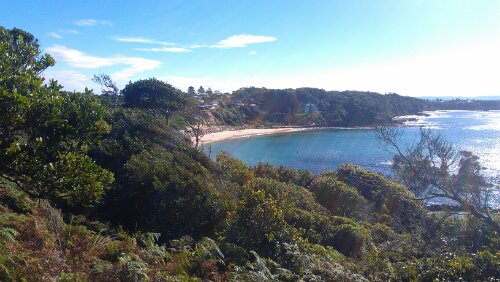
This is were we live

image

This is just a beautiful place to live. The Central Coast of New South Wales is apsolutely iconic.

Everywhere you look you have beautiful lakes estuaries and ocean views.

This place would have to be Australia’s best kept secret.

image

Bushland that is incredable. Birds everywhere.

The people of the Central Coast need to realize how lucky they are to live in such a place and as we appreciate the natural beauty we need to be mindful of preserving and protecting what we have.

Transport for NSW on Long Term Master Plan for Transport – Submission by David Holland

Gallery2020 Publishing is able to present the submission by David Holland on the Transport for New South Wales (NSW) Long Term Master Plan Discussion paper April 2012.

Follow this link to read the full Document >>>:

In addition Gallery2020 Publishing would like to introduce the 2012 updated version of the Plan put forward by David Holland in 2008.

This proposed plan was the Blue Haven Bus and Rail Interchange, incorporating rail yards for Sydney Trains to layover before the next days services. Blue Haven is the most northern suburb of the growing region known in NSW as the Central Coast. This document also contains in appendix E, a proposal to extend Central Coast bus services to Charlestown, thereby allowing Central Coast commuters to access a wide array of Newcastle bus services.

Follow this link to read this newly updated document>>: